
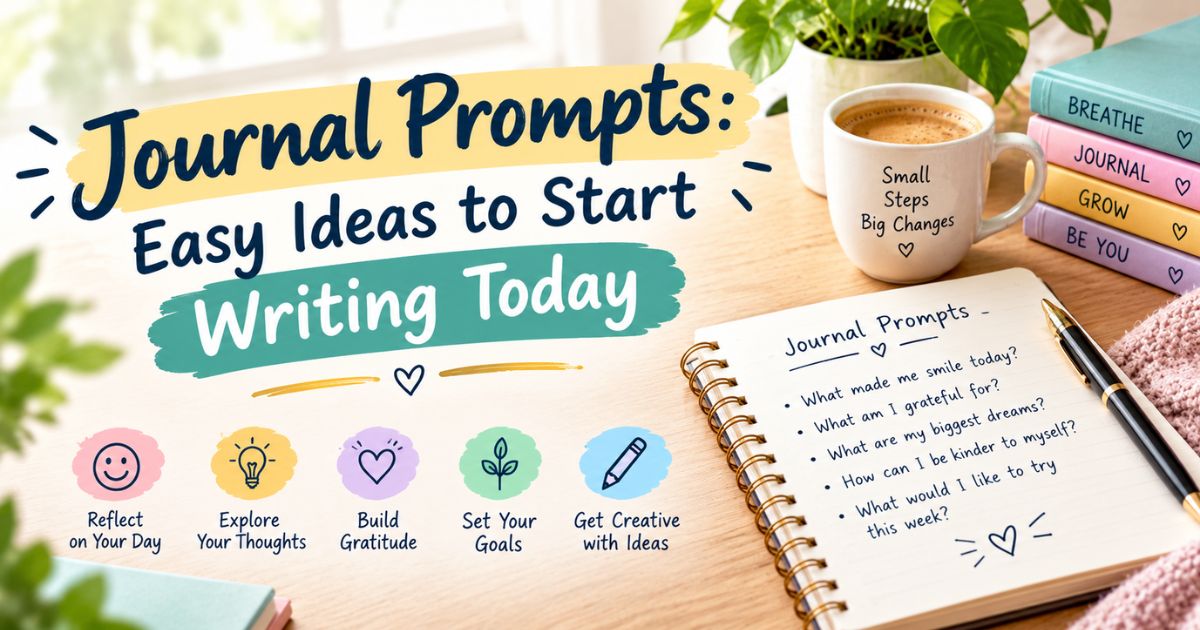
Staring at a blank page is the fastest way to quit journaling. Journal prompts fix that problem. They give your mind a starting point, so your pen can move without pressure. Whether you want to calm anxiety, understand yourself better, or simply write more often, the right question opens the door. This guide shares practical ideas, simple steps, and honest advice on what actually works.
What Are Journal Prompts and Why Do They Work
Journal prompts are short questions or sentence starters that guide your writing. Instead of wondering what to say, you respond to a specific idea, such as “What made me smile today?” Prompts remove the decision fatigue that often stops people before they begin. They also steer your attention toward useful topics, like gratitude, goals, or feelings you have been avoiding. Think of it as stretching, not training.
Research supports the habit behind them. Studies on expressive writing, led by psychologist James Pennebaker, found that writing about emotions can support well-being and reduce stress for some people. Journaling does not replace therapy, but many people find it a helpful way to process thoughts. Prompts make that process easier because they give your reflection direction. You spend less time deciding and more time thinking.
How to Use Journal Prompts Step by Step
You do not need a fancy notebook or a perfect routine. A plain notebook, a notes app, or a few loose pages work fine. What matters is showing up. Choose a quiet moment, pick one prompt, and write without editing. Let sentences be messy. Nobody will grade your journal, so honesty matters more than polish. Start small, and let the habit grow naturally.
- Pick a consistent time, such as after breakfast or before bed.
- Choose one prompt that matches your mood.
- Set a timer for five to ten minutes.
- Write without stopping or correcting yourself.
- Reread your entry and underline one useful insight.
Here is a quick example. Say you choose the prompt, “What is taking up too much space in my mind right now?” Set a timer for five minutes. Write every worry that comes up, even small ones. When the timer ends, circle one thing you can control. That single circle turns a messy brain dump into a clear next step. Short sessions like this build momentum faster than long, rare ones.
Journal Prompts for Beginners
If you are new to journaling, keep your first prompts light. Easy questions build confidence and show you that writing does not have to feel heavy. Aim for a few sentences at first. You can always write more if the words start flowing. The goal in week one is simply to enjoy the act of putting thoughts on paper. Think of it as stretching, not training.
- What made me smile today?
- What is one thing I want to remember about this week?
- What did I eat, hear, or see that I enjoyed today?
- Who made my day easier, and how?
- What is one small win I had recently?
- What am I looking forward to?
- How does my body feel right now?
- What is my favorite place, and why?
- What would make tomorrow a good day?
- Finish this sentence: “Right now, I feel…”
Notice that none of these questions demands a deep answer. That is intentional. Beginner journal prompts for daily writing work best when they feel almost too easy. Once you build a rhythm, you can move toward deeper questions about values, fears, and goals. Many people find that a two-week streak of simple entries makes harder topics feel far less intimidating.
Prompts for Self-Discovery and Personal Growth
Self-discovery prompts help you understand what you value, fear, and want. They work best when you answer slowly and honestly. Skip the answer you think you should give. Write the one that feels true, even if it surprises you. Over time, patterns appear. You may notice the same worry, wish, or relationship showing up again and again, which points to what deserves your attention.
Prompts for Knowing Yourself
- What do I need more of in my life? What do I need less of?
- When do I feel most like myself?
- What am I pretending not to know?
- Which values would I never compromise?
- What would my younger self be proud of?
- What do I say yes to when I really want to say no?
Prompts for Goals and Career
- What would a great year look like for me?
- What skill do I want to build in the next six months?
- What is one fear holding me back, and what is the smallest step against it?
- If money and time were not a problem, what would I work on?
- Who do I admire professionally, and what exactly do I admire?
Try pairing one prompt with a weekly review. Every Sunday, read your last few entries and underline anything that repeats. This simple habit turns scattered writing into real insight. For example, if you keep writing about feeling overworked, that tells you something concrete about your schedule or boundaries. Journaling then becomes more than venting. It becomes a tool for making better decisions.
Prompts for Anxiety, Stress, and Healing
Writing can give anxious thoughts somewhere to go. When worries stay in your head, they loop. On paper, they slow down and become easier to examine. Prompts for anxiety and stress ask you to name what you feel, separate facts from fears, and look for small steps forward. Keep your tone kind. You are sorting thoughts, not judging yourself for having them.
- What am I worried about right now? Write every item.
- Which of these worries is a fact, and which is a guess?
- What is within my control today?
- What would I tell a friend who felt this way?
- What has helped me through a hard time before?
- What do I need right now: rest, support, movement, or time?
- What is one small thing I can do in the next hour?
- What am I allowed to let go of today?
A quick note on limits. Journaling is a helpful self-care practice, but it is not a substitute for professional support. If writing stirs up painful memories or your anxiety feels overwhelming, consider talking with a licensed therapist or your doctor. If you ever feel unsafe, call or text 988, the Suicide and Crisis Lifeline in the U.S. Use your journal as one tool among several.
Gratitude Prompts for Daily Reflection
Gratitude prompts train your attention. Instead of scanning for problems, you practice noticing what works. This does not mean ignoring hard days. It means giving good moments equal airtime. Be specific. “I am grateful for my family” is fine, but “I am grateful my sister called during lunch” brings the moment back to life and makes the habit feel real.
Morning Prompts
- What do I want to focus on today?
- What is one thing I can do to take care of myself?
- Who or what am I grateful for this morning?
- What would make today feel successful?
Evening Prompts
- What went well today, and why?
- What challenged me, and what did I learn?
- What am I proud of, even if it was small?
- What do I want to let go of before sleep?
Morning and evening prompts serve different jobs. Morning questions set your intention for the day. Evening questions help you close it. Together, they take about ten minutes and create a simple daily reflection loop. You start with purpose, you end with perspective, and your journal captures what changed in between. Many people find this pairing calmer than a single long entry.
How to Choose the Right Prompt and Build a Habit
Not every prompt fits every day. Match the question to your energy and goal. Tired? Choose a gratitude or beginner prompt. Restless? Try a brain dump. Facing a decision? Reach for a self-discovery question. The table below shows how common prompt types compare, so you can pick the right one in seconds instead of scrolling for ideas. Most take five to fifteen minutes.
Prompt Type Comparison Table
| Prompt Type | Best For | Time Needed | Example |
|---|---|---|---|
| Beginner | Starting a habit | 3–5 minutes | “What went well today?” |
| Self-discovery | Clarity and decisions | 10–15 minutes | “When do I feel most like myself?” |
| Anxiety and stress | Calming racing thoughts | 5–10 minutes | “What is within my control today?” |
| Gratitude | Mood and perspective | 3–5 minutes | “Who made my day easier?” |
| Goal-setting | Planning ahead | 10–15 minutes | “What skill do I want to build?” |
Habit matters more than length. Pick a trigger you already have, like your morning coffee or the moment you get into bed, and attach journaling to it. Keep your notebook visible. Lower the bar on busy days: one sentence still counts. Missing a day is not failure. Simply return to the next prompt without guilt, and the streak will take care of itself.
Sample Weekly Plan
| Day | Focus | Time |
|---|---|---|
| Monday | Set goals for the week | 10 minutes |
| Tuesday | Gratitude | 5 minutes |
| Wednesday | Stress check-in | 10 minutes |
| Thursday | Self-discovery | 10 minutes |
| Friday | Celebrate wins | 5 minutes |
| Saturday | Free writing | 10 minutes |
| Sunday | Weekly review | 15 minutes |
Journaling Checklist
- ✔ Choose a notebook or app you enjoy using
- ✔ Pick a regular time and place
- ✔ Select one prompt before you sit down
- ✔ Set a timer for five to ten minutes
- ✔ Write honestly, without editing
- ✔ Review your entries once a week
Frequently Asked Questions
What are good journal prompts for beginners?
Good beginner prompts are short, specific, and easy to answer. Try “What made me smile today?” or “What is one thing I want to remember about this week?” These questions take only a few minutes and ask for small details, not big conclusions. Start there, then add deeper questions as writing begins to feel natural and comfortable.
How long should I journal each day?
Five to ten minutes is plenty for most people. Consistency matters more than length. A short, regular session beats a long one you skip. Set a timer if it helps, and stop when it ends. If you want to keep writing, go ahead. If you only manage one sentence on a tough day, that still counts as showing up.
Should I journal by hand or on a device?
Both work. Handwriting slows you down, which many people find helpful for reflection. Typing is faster and easier to search later. Choose the method you will actually use. Some people write by hand at night and type quick notes during the day. Test each for a week, then keep whichever feels easier and more natural.
Conclusion
Journal prompts turn a blank page into a conversation with yourself. Start with simple questions, then move into self-discovery, stress relief, and gratitude as your confidence grows. Keep sessions short, stay honest, and review your entries once a week. Most of all, be patient. The best journaling habit is the one you will actually keep. Pick one prompt from this guide and write your first entry today.
