
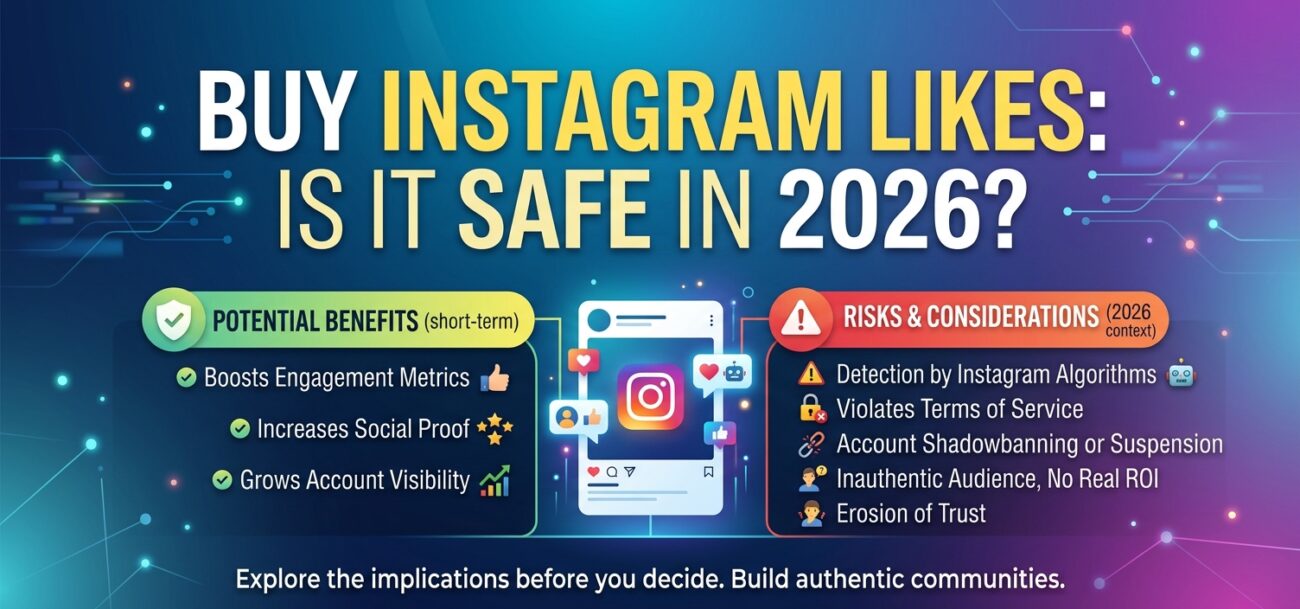
You posted a great photo. It got twelve likes. Meanwhile, a competitor’s average post pulls in thousands. It’s tempting to wonder whether you should buy Instagram likes and close the gap fast. Plenty of people ask the same thing every day, and the honest answer takes more than a simple yes or no.
This guide explains how the service works, what it costs, and where the real dangers sit. You’ll also get a seller checklist and proven alternatives that build the kind of engagement Instagram’s algorithm actually rewards.
What It Means to Buy Instagram Likes
To buy Instagram likes means paying a third-party seller to add likes to your posts. You send a post link, pick a package, and pay. The seller then delivers the likes within minutes or spreads them over several days. Most services never ask for your password. Instead, they route likes through networks of bot accounts, inactive profiles, or paid click farms located around the world.
Not all sellers work the same way, and the source of the likes matters. Fake accounts are cheap but easy for Instagram to detect. Real but inactive accounts look better on the surface, yet they rarely engage again. A small group of providers promote your content to real users through ads. Price usually reveals which type you are getting, so read the details before you pay.
Types of likes sellers deliver
| Type of likes | Where they come from | Quality | Risk level |
|---|---|---|---|
| Bot likes | Automated fake profiles | Very low | High |
| Inactive real accounts | Dormant or recycled profiles | Low | Medium to high |
| Click-farm likes | Paid workers in bulk | Low to medium | Medium |
| Promoted likes | Real users reached through ads | Higher | Lower |
Why People Buy Instagram Likes
The main driver is social proof. People trust what others already approve of. A post with 3,000 likes looks credible at a glance, while a post with 15 looks ignored. New brands, local shops, and creators feel that pressure early, because visitors judge a profile in seconds. A higher like count can make that first impression feel stronger. That pressure is real, and it explains the demand.
A second reason is the algorithm. Many people believe early engagement pushes a post into more feeds. Instagram does weigh how people respond to content, so the theory sounds logical. The catch is that it values meaningful signals like saves, shares, comments, and watch time. Likes from bots add a number, but they add none of those signals. Real viewers drive those.
Social proof and the algorithm myth
Buyers usually fall into a few groups:
- New business owners who want a credible-looking launch
- Influencers trying to meet brand partnership expectations
- Creators who feel stuck after weeks of low engagement
- Marketers testing quick fixes for client accounts
Consider a new coffee shop with 40 followers. The owner buys 500 likes on the grand-opening post. Visitors see the number, but nobody comments, and foot traffic stays flat. The likes created an impression without creating interest.
The Real Risks of Buying Instagram Likes
Instagram’s rules prohibit artificial engagement. If the platform detects fake likes, it can remove them, reduce your reach, or restrict your account. Enforcement is not consistent, so some buyers never notice a penalty. Others see sudden drops in reach after a purchase. You are betting your account’s health on a system you cannot predict, and that bet rarely pays off for long.
Fake likes also distort your data. Your engagement rate falls because thousands of likes sit beside almost no comments or shares. Brands and savvy followers notice that gap quickly. Worse, you lose clear feedback. You cannot tell which content truly connects when bots inflate the numbers. Good strategy depends on honest data, and purchased likes quietly corrupt it. That hurts every future decision.
Legal and FTC concerns
For businesses, the stakes go beyond Instagram. The Federal Trade Commission finalized a rule in 2024 that prohibits buying or selling fake indicators of social media influence, such as followers or likes, for commercial purposes when the buyer knows they are fake. Penalties can reach tens of thousands of dollars per violation. If you run a brand account, speak with an attorney before you buy anything. This is general information, not legal advice.
Security and scam risks
Many sellers are scams. Some take payment and deliver nothing. Others ask for your Instagram password, which hands them full control of your account. A few harvest your card details. Never share login credentials. Pay only through trusted methods that offer dispute protection, such as a credit card, and treat any request for your password as an immediate red flag. Your account is worth more than the discount.
How Much It Costs to Buy Instagram Likes
Prices vary widely. Low-quality packages can cost only a few dollars per 100 likes, while higher-quality options that use real accounts or promotion cost noticeably more. Bulk discounts are common. Subscription plans that add likes to every new post also exist. Remember that a rock-bottom price usually means bot accounts, which carry the highest risk of removal. Always check current pricing, since it changes often.
Cost is not only the price tag. Consider what the money could do elsewhere. A modest ad budget can put your content in front of real people who may follow, comment, or buy. Purchased likes end the moment they are delivered. Paid promotion can start conversations. The difference in long-term value is large. Compare both before you decide, using the table below.
Bought likes vs. organic growth vs. ads
| Factor | Bought likes | Organic growth | Instagram ads |
|---|---|---|---|
| Speed | Minutes to days | Weeks to months | Hours to days |
| Real audience | No | Yes | Yes |
| Account risk | High | None | None |
| Drives comments and sales | Rarely | Often | Often |
| Lasting value | Low | High | Medium |
How to Spot a Scam Seller Before You Pay
If you still plan to buy Instagram likes, vet the seller like you would any online vendor. Scams in this space are common, and the buyer has little recourse once the money leaves. Spend ten minutes researching. Search the company name along with words like scam or reviews, and look for independent feedback on sites you do not control. Trust patterns, not testimonials.
Pay attention to what the seller promises. Guarantees of instant, permanent, or 100 percent safe results are warning signs, because no seller controls Instagram’s enforcement. Watch for vague contact details, missing refund terms, and pressure tactics like countdown timers. A legitimate business explains its delivery method clearly, offers real support, and never needs your password. Slow down if anything feels rushed or unclear.
Seller vetting checklist
- The seller never asks for your password
- Contact details and a business address are easy to find
- Refund and delivery terms are written clearly
- Independent reviews exist outside the seller’s own site
- The site uses secure checkout (look for HTTPS)
- You can pay by card with dispute protection
- No promise of guaranteed or permanent results
Safer Ways to Get More Instagram Likes
Organic engagement takes longer, but it compounds. Real likes come from people who found your content useful, funny, or relevant. Those people also save, share, and follow. The algorithm reads those actions as proof that your content deserves wider distribution. That is why a post with 200 real likes can outperform a post with 2,000 purchased ones. Quality beats volume here.
Start with the basics, then build a routine. The steps below work for creators, small businesses, and personal brands alike. Give each one a few weeks before judging results, and track your engagement rate instead of raw like counts. Consistency matters more than any single post, so pick a schedule you can actually keep. Small, steady improvements add up faster than occasional viral attempts.
Six steps that build real engagement
- Post Reels regularly. Short video still earns the widest reach to non-followers.
- Open with a strong hook. Put the most interesting idea in the first two seconds.
- Use a few relevant hashtags and keywords in captions to help discovery.
- Reply to every comment in the first hour to spark conversation.
- Collaborate with creators or brands in your niche to reach shared audiences.
- Test a small ad budget on your best-performing post to reach new viewers.
Here is an example. A local bakery posts one behind-the-scenes Reel each week and answers every comment. Within a few months, its posts attract steady likes from nearby customers. Those likes come with questions, saves, and orders, which is exactly what likes from bots cannot provide.
Conclusion
When people search to buy Instagram likes, they want fast credibility. The reality is less appealing. Purchased likes can trigger penalties, distort your data, expose you to scams, and for businesses, raise legal questions. They also fail to create the comments, shares, and sales that matter. Real growth is slower, but it builds an audience that stays. Put your time and budget into content, community, and smart promotion instead.
FAQs
How long do bought Instagram likes last?
It depends on the seller. Bot and inactive-account likes can disappear within days or weeks when Instagram cleans them up. Some sellers offer refills, but the pattern repeats. Likes from real users are far more durable.
Should I hide my like counts instead?
It’s a reasonable option. Instagram lets you hide like counts on your posts in settings. This removes the pressure to compete on numbers and lets viewers focus on your content and captions.
What is a good engagement rate on Instagram?
Benchmarks vary by industry and account size. Many marketers treat an engagement rate of roughly 1 to 3 percent as healthy, and smaller accounts often score higher. Compare yourself to similar accounts in your niche.
Is it legal to buy likes for a personal account?
The FTC rule targets commercial uses, so a purely personal account is a different situation. Buying likes still violates Instagram’s terms and can lead to penalties. Check current rules or consult an attorney.
What is the difference between buying likes and buying followers?
Likes inflate single posts, while followers inflate your profile’s audience size. Both are artificial, and both carry similar risks. Fake followers can hurt more because they weaken your engagement rate across every post.
