
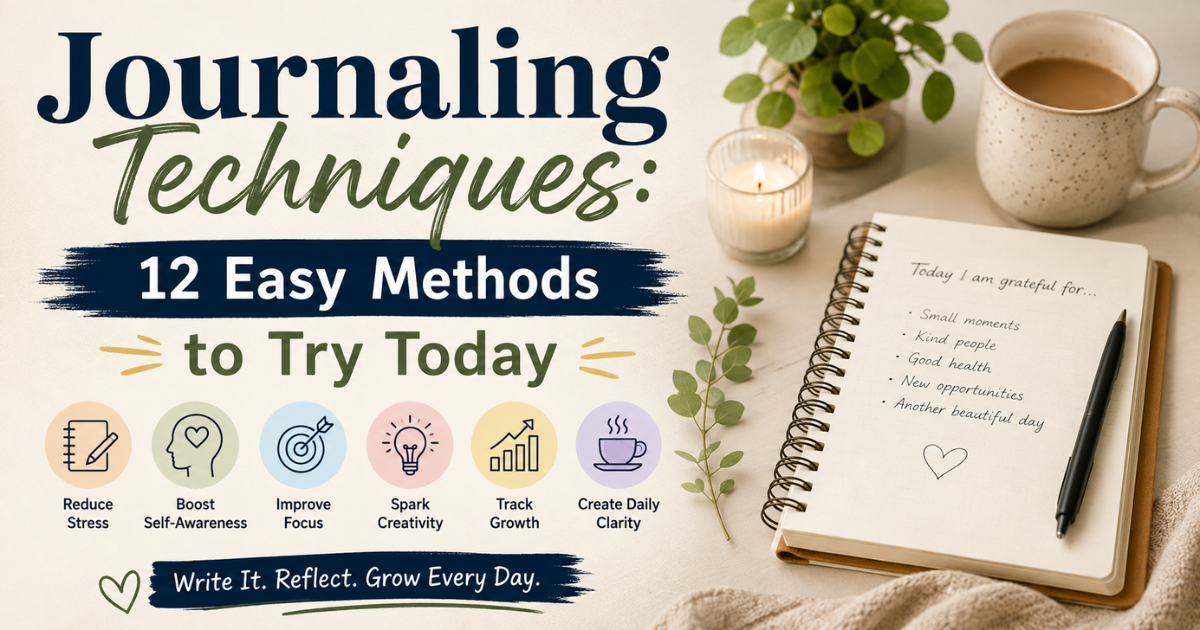
Staring at a blank page can feel intimidating, even when you know journaling is good for you. The truth is, you don’t need to be a great writer or have hours of free time. You just need the right approach. Different journaling techniques work for different goals, whether that’s calming an anxious mind, tracking personal growth, or simply making sense of a busy day.
This guide breaks down twelve practical journaling techniques you can start using immediately. Each one is simple, requires no special training, and fits into a real, everyday schedule. By the end, you’ll know exactly which method matches your personality and your goals.
What Is Journaling and Why It Matters
Journaling is the practice of writing down thoughts, feelings, or experiences on a regular basis. It’s not about perfect grammar or impressive prose. It’s a tool for processing life, whether that means working through stress, celebrating wins, or simply noticing patterns in your thinking over time. Anyone can do it, and there’s no wrong way to begin.
Many people confuse journaling with keeping a diary, but the two aren’t quite the same. A diary usually logs daily events in chronological order. Journaling is broader and more flexible. It can include lists, prompts, sketches, gratitude notes, or goal tracking. This flexibility is exactly what makes journaling techniques so useful across so many different needs.
The Difference Between Journaling and Diary Writing
A diary tends to answer the question “what happened today?” Journaling often asks deeper questions like “how did that make me feel?” or “what did I learn?” Diaries are typically private records of events, while journals can be structured tools for reflection, planning, or creativity. Understanding this distinction helps you pick techniques that actually serve your goals instead of just recording your day.
The Science-Backed Benefits of Journaling
Research consistently links regular writing practices to measurable improvements in mental and emotional health. Expressive writing has been shown to lower stress hormones, improve mood, and even support better sleep. When you put thoughts on paper, your brain processes them differently than when they just circle in your head, which is why journaling often brings a sense of relief.
Beyond emotional benefits, journaling techniques can sharpen memory, improve focus, and strengthen decision-making. Writing forces you to slow down and organize scattered thoughts into clear language. Over time, this practice builds self-awareness, helping you recognize patterns in your behavior, triggers for stress, and even recurring goals you may not have consciously noticed before.
- Reduces stress and anxiety symptoms
- Improves emotional regulation
- Strengthens memory and comprehension
- Boosts self-awareness and clarity
- Supports better sleep quality
- Encourages goal achievement
How to Choose the Right Journaling Technique for You
Not every journaling technique fits every person or purpose. Someone managing anxiety needs a different approach than someone tracking career goals. Before picking a method, ask yourself what you actually want from the practice. Are you looking to relax, plan, heal, or create? Your answer will point you toward the right style.
It also helps to consider your available time and personality. Some techniques take five minutes, while others require deeper, uninterrupted focus. If you’re someone who dislikes rigid structure, freeform styles will feel more natural. If you crave organization, structured formats like bullet journaling may suit you better. There’s no single “correct” method, only the one that fits your life right now.
12 Journaling Techniques to Try Today
Reflective Techniques
1. Gratitude Journaling Write down three to five things you’re grateful for each day. This simple habit shifts focus away from stress and toward positive moments, even small ones like a good cup of coffee or a kind text message.
2. Stream of Consciousness Writing Also called “morning pages,” this technique involves writing continuously without editing or overthinking. The goal is to clear mental clutter by letting thoughts flow freely onto the page for several minutes.
3. Reflective Journaling At the end of the day, write about what happened and how it made you feel. This technique builds emotional awareness and helps you spot patterns in your reactions over time.
4. Prompt-Based Journaling Use guided questions like “What challenged me today?” to spark deeper thinking. Prompts are especially helpful when you’re unsure what to write about.
Structured and Goal-Based Techniques
5. Bullet Journaling This method uses short bullet points, symbols, and lists to track tasks, events, and notes. It’s ideal for people who want organization and productivity in one place.
6. Goal-Setting Journaling Write specific, measurable goals along with the steps needed to reach them. Reviewing this page weekly keeps your priorities visible and your progress accountable.
7. Habit Tracking Create a simple grid to mark off daily habits like exercise, water intake, or reading. Visual tracking increases motivation and consistency.
8. Five-Year Journaling This technique uses the same page across multiple years, letting you compare your thoughts and growth on the same date over time.
Creative and Expressive Techniques
9. Art or Visual Journaling Combine sketches, doodles, or collages with short written notes. This appeals to visually-minded people who process emotions better through imagery.
10. Letter Writing Journaling Write a letter to yourself, a future version of you, or someone you need closure with. You never have to send it, but the act of writing brings clarity.
11. Travel Journaling Document experiences, observations, and feelings while exploring new places. This preserves memories in a way photos alone can’t capture.
12. Dream Journaling Keep a notebook by your bed and jot down dreams immediately after waking. Over time, this can reveal recurring themes in your subconscious mind.
Journaling Tools and Supplies Compared
Choosing the right tools can make journaling easier to stick with. Here’s a quick comparison of common options.
| Tool Type | Best For | Pros | Cons |
|---|---|---|---|
| Paper Notebook | Reflective and creative journaling | Tactile, distraction-free | No search function, easy to lose |
| Digital App | Habit tracking, prompts | Searchable, reminders built in | Screen distractions possible |
| Bullet Journal | Productivity and planning | Highly customizable | Time-consuming setup |
| Voice Memo | Quick daily thoughts | Fast, hands-free | Harder to review later |
A second table can help beginners match technique to time commitment.
| Technique | Average Time Needed | Difficulty Level |
|---|---|---|
| Gratitude Journaling | 5 minutes | Easy |
| Stream of Consciousness | 10–15 minutes | Easy |
| Bullet Journaling | 10 minutes daily | Moderate |
| Art Journaling | 20–30 minutes | Moderate |
Common Journaling Mistakes to Avoid
Many beginners quit journaling because they expect it to feel perfect right away. Common mistakes include trying to write beautifully instead of honestly, skipping days and feeling guilty, or picking a technique that doesn’t match their personality. These missteps make the habit feel like a chore rather than a helpful tool.
Another frequent error is overcomplicating the process with too many rules, colors, or formats before building consistency. It’s better to start simple and adjust later. Journaling should reduce stress, not add another source of pressure. If a technique feels forced, it’s completely fine to switch to a different one.
Quick Checklist to Avoid Common Mistakes:
- Don’t aim for perfect writing
- Don’t skip days without flexibility
- Don’t overcomplicate your setup
- Don’t compare your journal to others
- Don’t force a technique that feels wrong
How to Build a Journaling Habit That Sticks
Consistency matters more than intensity when building a journaling habit. Start with just five minutes a day rather than committing to long sessions you can’t maintain. Pairing journaling with an existing habit, like morning coffee or brushing your teeth, makes it easier to remember without relying on willpower alone.
It also helps to keep your journal visible and accessible, whether that’s a notebook on your nightstand or an app on your phone’s home screen. Removing friction increases the odds you’ll actually use it. Over weeks and months, small consistent entries add up to meaningful insight, even if each individual entry feels minor at the time.
- Choose one technique to start with
- Set a specific time each day
- Keep sessions short at first
- Track your streak for motivation
- Adjust the method as your needs change
Conclusion
Journaling doesn’t require talent, time, or a perfect setup. It only requires a willingness to show up on the page. These twelve journaling techniques offer something for every personality and goal, whether you want stress relief, better organization, or a creative outlet. Start small, pick one method that resonates with you, and let consistency do the rest. Over time, journaling techniques like these can become one of the simplest, most effective tools for a clearer, calmer mind.
Frequently Asked Questions
How often should I journal for the best results?
Most experts recommend journaling three to five times a week for noticeable benefits, though even occasional entries can still support emotional clarity and reflection.
What is the best journaling technique for anxiety?
Gratitude journaling and stream of consciousness writing are especially effective for anxiety, since both techniques help redirect racing thoughts into a calmer, more focused format.
Do I need special supplies to start journaling?
No. A basic notebook and pen, or a free app on your phone, are enough to begin. Special supplies can enhance the experience but aren’t required for results.
Can journaling replace therapy?
Journaling is a helpful self-reflection tool, but it isn’t a substitute for professional mental health care. It works well alongside therapy rather than in place of it.
What should I do if I don’t know what to write?
Use prompt-based journaling. Simple questions like “What am I feeling right now?” or “What’s one thing that went well today?” make it easier to get started without overthinking.
