
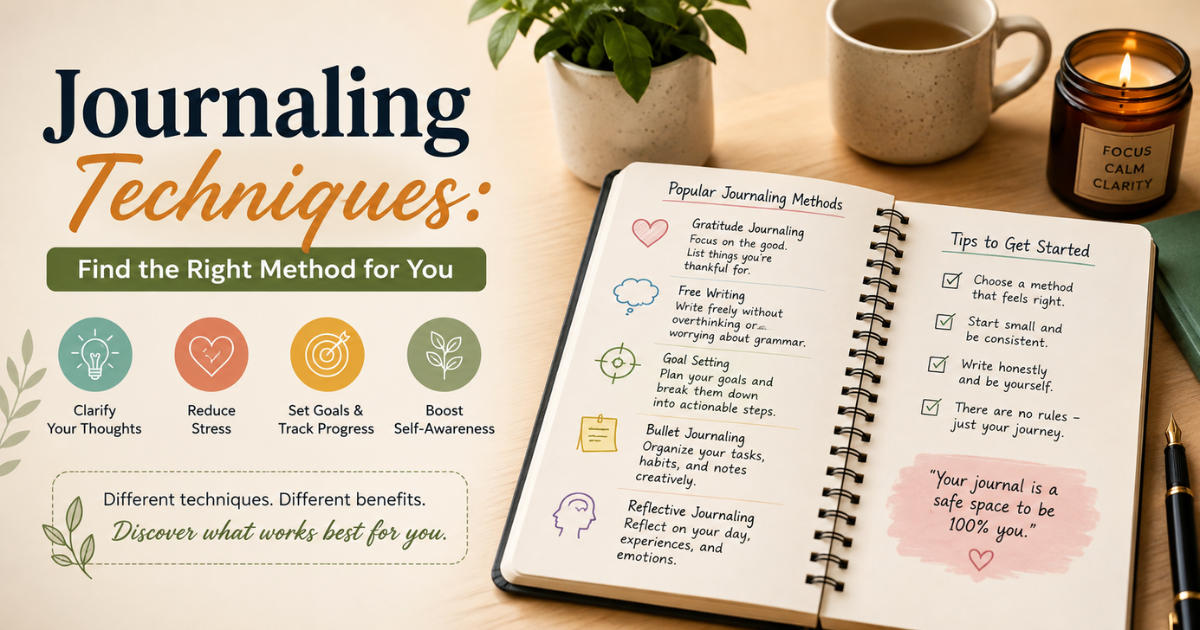
Millions of people pick up a journal every year, hoping it will bring more clarity to their busy lives. Yet many quit within weeks because they chose a method that didn’t fit their personality or goals. The truth is, there’s no single “right way” to journal. What works for one person can feel forced or pointless to another.
This guide walks you through the most effective journaling techniques available today, explains how each one works, and helps you figure out which style matches your lifestyle. Whether you want stress relief, better focus, or simply a place to process your thoughts, you’ll find a method here that fits.
What Is Journaling and Why It Works
Journaling is the practice of regularly writing down your thoughts, feelings, or experiences. It can be as simple as jotting a few lines before bed or as structured as tracking goals in a dedicated notebook. The format matters far less than the consistency behind it.
Research consistently links regular writing to lower stress levels, improved memory, and better emotional regulation. When you put thoughts on paper, you create distance from them, which makes it easier to process difficult emotions. This simple act of externalizing your inner world is why journaling techniques have remained popular across generations.
The Science Behind Writing Things Down
Psychologists have studied expressive writing since the 1980s, and the findings are consistent: people who write about their emotions regularly report fewer intrusive thoughts and improved coping skills. Writing activates the brain’s problem-solving centers, helping you organize chaotic thoughts into something manageable.
This is why so many therapists recommend journaling as a supplement to traditional treatment. It’s not a replacement for professional support, but it gives you a private space to reflect without judgment. Over time, this habit builds self-awareness that carries into everyday decision-making.
Popular Journaling Techniques to Try
Not every method suits every person. Some people crave structure, while others prefer complete freedom on the page. Below are the most widely used journaling techniques, each with a distinct purpose and approach.
- Free writing
- Bullet journaling
- Gratitude journaling
- Prompt-based journaling
- Stream of consciousness writing
Each technique below includes how it works and who it’s best suited for, so you can test a few before settling on your favorite.
Free Writing
Free writing means putting pen to paper and writing continuously for a set time, usually five to ten minutes, without worrying about grammar or structure. The goal is to let thoughts flow uninterrupted, bypassing your inner editor.
This technique works well for people who feel mentally cluttered or stuck. It’s especially useful first thing in the morning, helping clear your mind before the day’s demands take over. Many writers use it as a warm-up before tackling more focused creative work.
Bullet Journaling
Bullet journaling combines planning with reflection. You use short bullet points, symbols, and simple layouts to track tasks, habits, and notes in one notebook. It’s part productivity system, part personal diary.
This method suits people who like visual organization and want their journal to double as a planner. It requires more setup time than free writing, but the structure keeps you consistent. Many bullet journalers create weekly spreads that combine to-do lists with mood trackers and short reflections.
Gratitude Journaling
Gratitude journaling involves listing a few things you’re thankful for each day. It sounds simple, but studies show this small habit can meaningfully boost overall life satisfaction and reduce symptoms of depression over time.
This technique works best for people who tend toward negative thinking patterns or who want a quick, low-effort entry point into journaling. A typical entry takes less than five minutes, making it one of the easiest habits to sustain long term.
Prompt-Based Journaling
Prompt-based journaling uses guided questions to spark reflection. Instead of facing a blank page, you respond to a specific question like “What challenged me today?” or “What am I proud of this week?”
This method is ideal for beginners who feel unsure what to write about. Prompts remove the pressure of starting from scratch and often lead to deeper insights than free writing alone, since they direct your attention toward specific areas of your life.
Stream of Consciousness Writing
Stream of consciousness writing captures whatever crosses your mind in real time, without filtering or organizing it. It’s similar to free writing but leans even more into raw, unstructured thought.
This technique suits people processing intense emotions or working through a specific problem. Because there’s no filter, entries can reveal patterns in thinking you might not notice otherwise. It’s less about polished writing and more about honest self-discovery.
How to Choose the Right Journaling Technique for You
Picking the best journaling technique depends on your goal, personality, and available time. Someone seeking stress relief may thrive with gratitude journaling, while a person wanting better task management might prefer bullet journaling instead.
Consider how much structure you personally need. If a blank page feels intimidating, prompt-based journaling removes that barrier. If you enjoy creativity and visual design, bullet journaling gives you room to express that. The table below compares the main techniques side by side.
| Technique | Best For | Time Needed | Structure Level |
|---|---|---|---|
| Free Writing | Mental clarity, creativity | 5–10 minutes | Low |
| Bullet Journaling | Organization, habit tracking | 10–15 minutes | High |
| Gratitude Journaling | Positivity, quick habit building | 2–5 minutes | Low |
| Prompt-Based Journaling | Beginners, guided reflection | 5–10 minutes | Medium |
| Stream of Consciousness | Emotional processing | 10–15 minutes | Low |
Digital vs Paper Journaling: Which Is Better?
Once you’ve picked a technique, you’ll need to decide how you want to journal. Paper journals offer a tactile, distraction-free experience, while digital journaling apps provide convenience and searchability. Neither option is objectively better; it comes down to personal preference.
Paper journaling tends to slow down your thinking, which some people find more reflective and calming. Digital journaling, on the other hand, is easier to carry everywhere and often includes helpful features like reminders, prompts, and mood tracking built into the app itself.
| Format | Pros | Cons |
|---|---|---|
| Paper Journal | Distraction-free, tactile, private | Easy to lose, no backup |
| Digital Journal | Searchable, portable, backed up | Screen distractions possible |
If you’re someone who gets easily distracted by notifications, paper might serve you better. If convenience and organization matter most, a digital journaling app could be the smarter fit.
How to Build a Consistent Journaling Habit
Starting a journal is easy. Sticking with it is the real challenge. Most people abandon the habit within the first month because they set unrealistic expectations or tried to force a technique that didn’t feel natural.
Building consistency requires small, sustainable steps rather than big commitments. The following approach helps turn journaling into a habit that actually lasts, rather than another item on your to-do list that quietly disappears.
- Choose a specific time each day, like right after waking up or before bed.
- Start with just five minutes to lower the barrier to entry.
- Keep your journal or app somewhere visible as a reminder.
- Use prompts on days when you feel stuck.
- Track your streak to stay motivated without adding pressure.
Journaling Checklist for Beginners
- Choose one technique to start with
- Pick paper or digital format
- Set a consistent time of day
- Start with 5-minute entries
- Review your entries weekly
Common Journaling Mistakes to Avoid
Many beginners give up because of avoidable mistakes rather than the practice itself failing them. Recognizing these early can save you from unnecessary frustration and help the habit stick for the long term.
- Trying to write perfectly instead of honestly
- Comparing your journal to others on social media
- Setting overly long entries as the daily goal
- Skipping days and feeling guilty instead of restarting
- Choosing a technique that doesn’t match your personality
Avoiding these pitfalls keeps journaling enjoyable rather than another source of pressure. Remember, the goal is progress and reflection, not a flawless notebook.
Conclusion
Journaling techniques aren’t one-size-fits-all, and that’s exactly what makes this practice so accessible. Whether you choose free writing for mental clarity, gratitude journaling for positivity, or bullet journaling for structure, the right method is the one you’ll actually stick with. Start small, stay consistent, and let your journal evolve as your needs change. With the right journaling techniques in place, you’ll build a habit that supports your mental clarity, emotional health, and personal growth for years to come.
Frequently Asked Questions
What is the best journaling technique for beginners?
Prompt-based journaling is often the easiest starting point because it removes the pressure of facing a blank page and gives you clear direction for each entry.
How long should a journal entry be?
There’s no fixed length. Even five minutes or a few sentences a day can provide meaningful benefits, especially when done consistently over time.
Can journaling help with anxiety?
Yes, writing about your thoughts and feelings can reduce anxiety by helping you process emotions and identify patterns that trigger stress.
Should I journal every day?
Daily journaling helps build habit strength, but consistency matters more than frequency. A few focused entries per week can still be effective.
Is digital journaling as effective as paper journaling?
Both formats offer similar mental health benefits. The best choice depends on which one you’re more likely to use consistently.
